
Training and Competency
New training and qualifications are being developed to reflect a risk-based approach to TTM, empowering people to manage risk on site and formally recognising skills development.

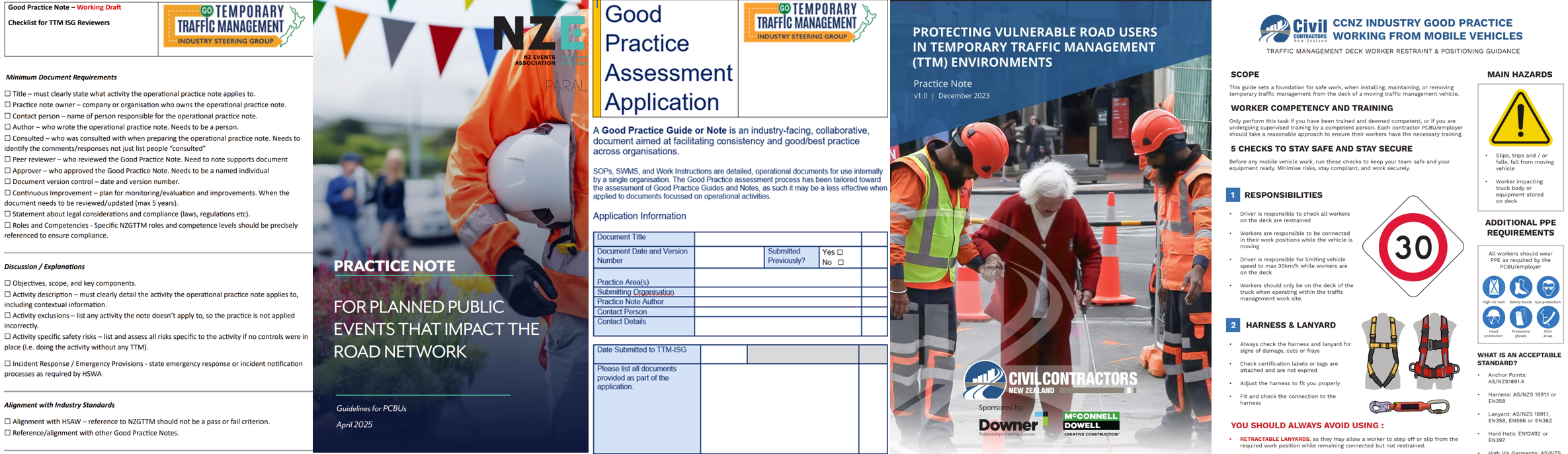
The Good Practice workstream has built a process and data repository to capture and share good practice across the industry, maximising safety and value for communities as TTM evolves.
.jpg)
%20(1).jpg)
Good decisions depend on good knowledge, and good knowledgeneeds to be accessible to everyone in the sector, not just those with the time or resources to find it. The Good Practice workstream is identifying and assessing guidance resources that close those gaps. This makes practical, well-developed guidance easier to find, easier to apply and more grounded in how work actuallyhappens on New Zealand's roads.
In 2026, the focus is on guidance for both suppliers and clients, covering the many of the common work types that arise. This is not about adding complexity. It is about making the right thinking easier to access and apply, whether you are a sole operator setting up a site or a client specifying requirements in a contract.
Alongside guidance documents, the workstream is capturing and sharing real examples of what good practice looks like in the field. Case studies and innovation showcases help shift sector norms through inspiration as much as instruction, building a shared picture of what good TTM delivery looks like under the new framework.
The workstream recognises that Good Practice needs to address how work is planned, coordinated and delivered while ensuring the health and safety of road workers and users of the road corridor. Guidance should be useful across all three stages of the TTM life-cycle. This supports a more integrated approach to how the sector thinks about its work.
Good Practice is led by Dave Rendall (FultonHogan).

Reach out to the Good Practice team.


