

Understanding Risk: Managing Risk Throughout the Contracting Chain
Road and roadside work often involves multiple organisations with overlapping health and safety duties. Explore WorkSafe guidance and practical tools to help PCBUs understand their responsibilities, manage shared risks and work together throughout the contracting chain.
Get strategic insights delivered monthly. No fluff, just actionable perspectives on the challenges facing business leaders today.
Road and roadside work is rarely delivered by a single organisation. Whether you're a road controlling authority, contractor, subcontractor, utility owner, consultant or temporary traffic management provider, multiple PCBUs are often working together to deliver a project.
Managing health and safety in these environments relies on more than each organisation managing its own work. It requires everyone involved to understand their responsibilities, communicate early, and work together to identify, manage and review risks throughout the project.
As part of our Understanding Risk series, we'rehighlighting WorkSafe New Zealand's Keeping Healthy and Safe While Working on the Road or Roadside – Good Practice Guidelines, along with a practical prompt sheet designed to support conversations about overlapping duties and site traffic management.
Understanding the contracting chain
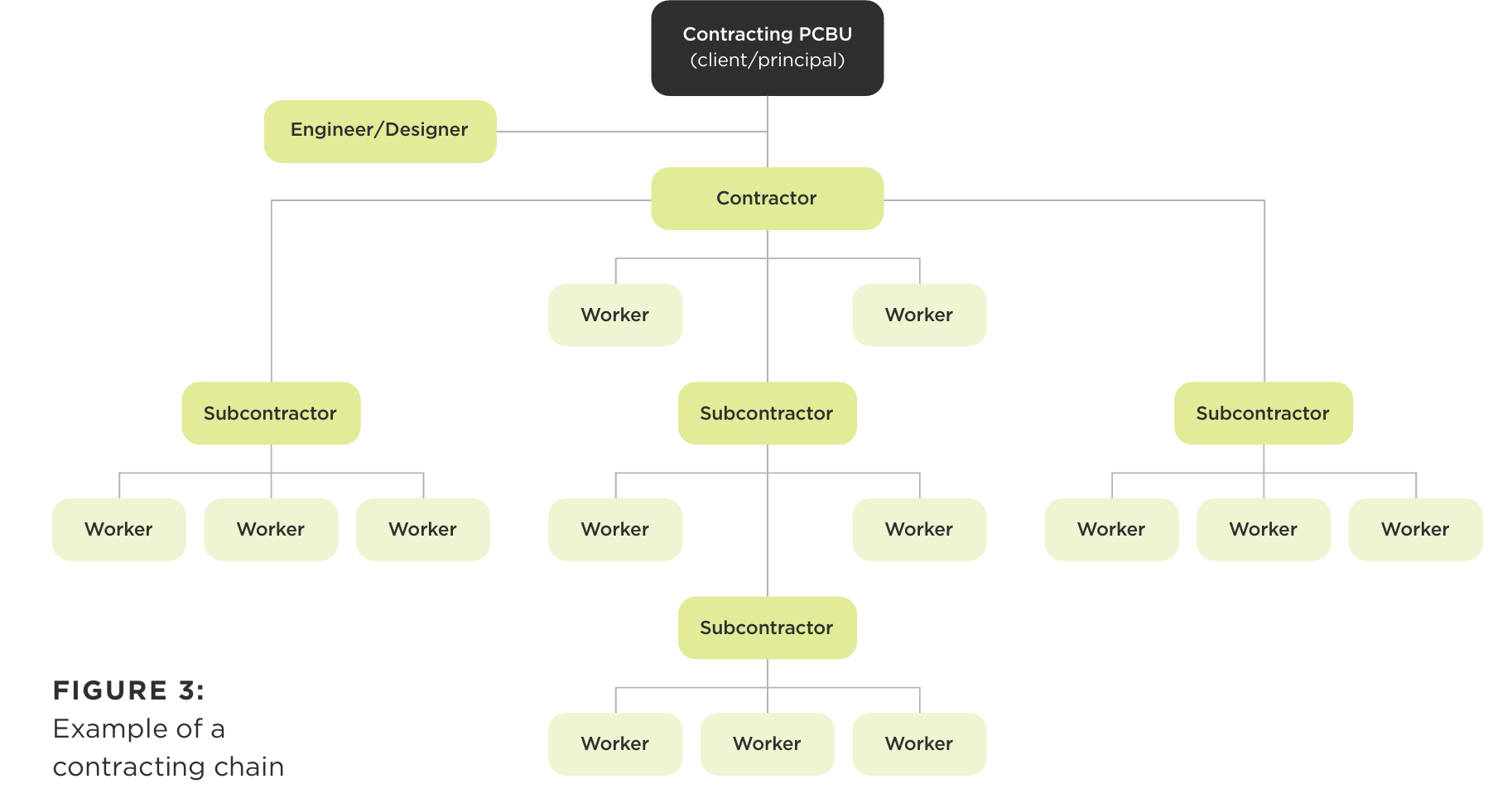
WorkSafe describes road and roadside work as commonly operating through a contracting chain, where a client PCBU engages a contractor PCBU, who may in turn engage subcontractor PCBU’s.
Every organisation within that chain has health and safety duties. Those duties often overlap, meaning PCBUs must work together to manage shared risks.
Importantly, health and safety responsibilities (different for each type of PCBU) cannot simply be transferred to another organisation because work has been contracted out. Refer to Part A, Section 3 of WorkSafe’s Keeping Healthy and Safe While Working on the Road or Roadside Good Practice Guidelines for further information on the contracting chain and different PCBU’s duties.
Four key principles for overlapping duties
WorkSafe identifies four important principles for PCBUs working within a contracting chain.
Consult
Share relevant information early and involve other planning work that affects shared health and safety risks.
Cooperate
Work together to ensure everyone understands their responsibilities and how risks will be managed.
Coordinate
Coordinate activities where duties overlap so that control measures work together and do not create new risks.
Duties remain with each PCBU
While PCBUs can agree who will carry out particular activities, each organisation retains its own health and safety duties (noting different types of PCBU in the contracting chain have different duties) and should ensure agreed arrangements remain effective.
Key message
The greater the influence and control a PCBU has over a worksite or health and safety matter, the greater its responsibility is likely to be.
Risk management starts before work begins
Effective risk management begins long before workers arrive on site.
WorkSafe recommends applying a structured risk management process that includes:
- Identifying hazards
- Assessing risks
- Eliminating risks where reasonably practicable
- Minimising remaining risks using the hierarchy of controls
- Reviewing controls regularly
- Consulting with workers throughout the process
The guidance also encourages organisations to think about risk across the whole system—from planning and design through to construction, maintenance and future operations—rather than considering individual tasks in isolation.
Using the hierarchy of controls
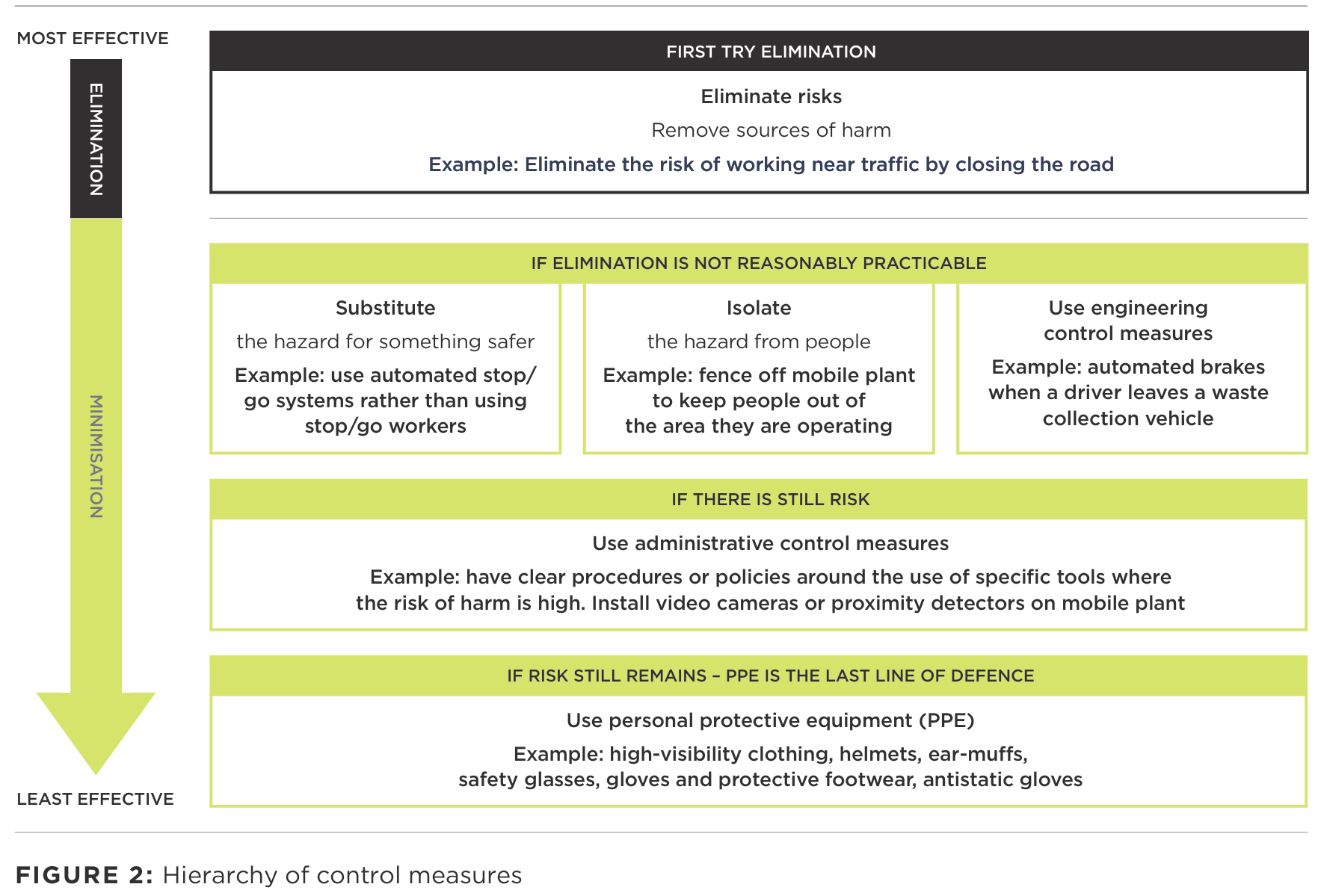
One of the key messages throughout the guidance is to always consider the most effective control measures first.
Where reasonably practicable, eliminate the risk before considering lower-level controls.
Examples within the guidance include:
- Eliminating exposure by closing the road where appropriate.
- Isolating workers from hazards through physical barriers or exclusion zones.
- Using engineering and administrative controls to further reduce risk.
- Substituting manual stop/go operations with automated systems where suitable.
- Using PPE as the final layer of protection, not the primary control.
Practical conversation starters
Alongside the Good Practice Guidelines, WorkSafe has developed a practical Site Traffic Management and Overlapping Duties Prompt Sheet.
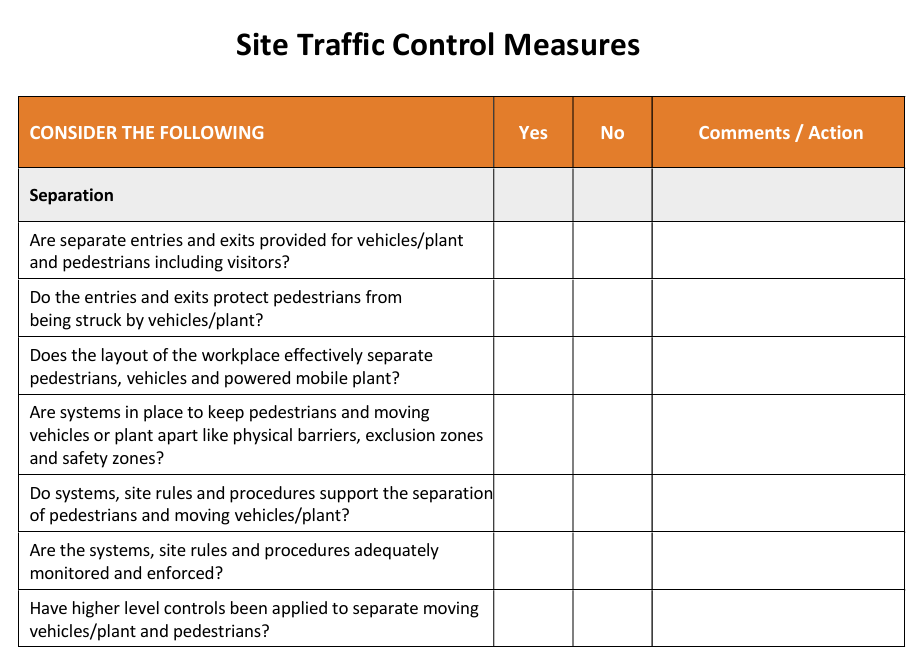
Rather than replacing existing planning processes, the prompt sheet provides a simple checklist to help organisations discuss key topics before work begins, including:
- Separation of pedestrians and vehicles
- Vehicle movements
- Site layout
- Worker information, training and supervision
- Vehicle and plant safety
- Consultation with other PCBUs
- Coordination of emergency arrangements
- Sharing information and site rules
- Understanding risks across different worksites
These prompts are intended to support conversations between organisations where health and safety duties overlap.
Download the resources
To support your organisation, we've included the following WorkSafe resources:
A comprehensive guide for PCBUs involved in road and roadside work, covering risk management, contracting chains, worker health, safety, planning and good practice.
Site Traffic Management and Overlapping Duties Prompt Sheet (click to view)
A practical checklist designed to support discussions around over lapping duties and site traffic management before work begins.