

Corridor Management Powers Guide: Supporting Better Coordination and Safer Outcomes
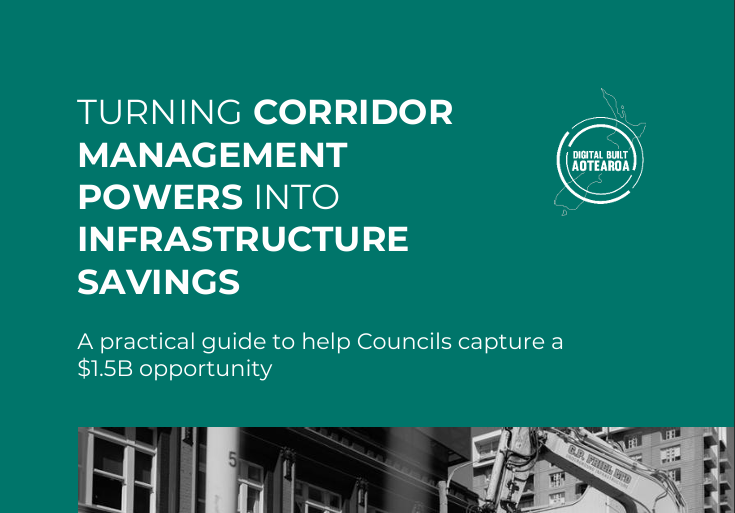
The Corridor Management Powers Guide provides a practical look at what powers councils already hold to meet their obligations under the National Code – and how they can use them to support earlier coordination for better outcomes across New Zealand’s transport corridors.
Get strategic insights delivered monthly. No fluff, just actionable perspectives on the challenges facing business leaders today.
Better coordination starts long before workreaches the road
A practical guide from the Digital Built Aotearoa Foundation highlights proactivesteps councils can take (and are taking) to require earlier visibility, sharedinformation and better coordination of activity in their road corridor. Thesemeasures can help reduce disruption, avoid conflicts and support safer, moreefficient delivery.
Planning for risk earlier
Effective temporary traffic management doesnot begin when a crew arrives onsite. Many of the decisions that influencerisk, disruption and how effectively work can be delivered are made muchearlier.
Forward visibility of planned works, goodinformation about the corridor and coordination between Road ControllingAuthorities, utilities, contractors and other parties can help identify issuesearlier, avoid unnecessary conflicts and create opportunities to coordinateactivity.
The Corridor Management Powers Guide,developed by Digital Built Aotearoa Foundation (DBAF), provides a practicallook at the mechanisms already available to support that approach.
Making better use of existing powers
The guide has been developed for RoadControlling Authorities (RCAs) and outlines the powers and responsibilitiesavailable to Corridor Managers under the National Code of Practice for UtilityOperators’ Access to Transport Corridors.
Its central message is that RCAs alreadyhold significant powers and responsibilities to actively coordinate works.Corridor Managers are required to coordinate works where practicable, provideinformation about planned activity, set reasonable conditions and ensurecompliance. Utility operators also have responsibilities, including notifyingCorridor Managers of planned works and participating in regional coordination.
The Code sets out what needs to happen, butdoesn’t say how. The guide aims to fill in the gaps so RCAs can:
· understand the powers they haveat their disposal
· set more targeted conditionsthat require the sharing of planned works and underground assets data
· direct the sector to providefeedback when excavation discoveries may benefit asset owners of future work
· recover the costs of adopting thetools that help them to plan and coordinate.
The opportunity is not necessarily aboutintroducing new requirements. It is about making better use of the framework,information, relationships and toolsalready available.
Communication and coordination across the corridor
At its heart, effective corridor managementdepends on good communication, coordination and collaboration across theorganisations that plan, approve and deliver work.
Knowing what work is planned, where it willoccur and what other activity may be happening nearby can support betterforward planning. It can also help reduce repeat road openings, clashes betweenprojects and avoidable disruption for road users, businesses and communities.
The guide estimates that poor workssequencing and asset strikes cost New Zealand more than $1.5 billion each year,drawing on international evidence and local sector research. This reinforcesthe value of identifying risks and opportunities before activity reaches theroad.
Using shared information to plan earlier
The guide discusses two tools operated byDBAF: the NZ Forward Works Viewer (NZFWV), which supports visibility of plannedworks, and the NZ Underground Asset Register (NZUAR), which provides a view of undergroundutilities.
These tools are intended to give councils,utility operators and contractors a clearer picture of what is happening aboveand below the road. Shared visibility can make it easier to identify conflicts,coordinate activity and plan work earlier.
The guide also includes examples fromWellington City Council and New Plymouth District Council, showing howdifferent councils are using forward works and underground asset information tosupport more proactive corridor management.
Why this matters for TTM
For the TTM sector, the guide is a usefulreminder that managing risk is a shared responsibility across the contractingand delivery chain.
When corridor users communicate early,share reliable information and coordinate planned activity, project teams arebetter placed to make informed decisions about timing, access, sequencing andrisk. That creates better conditions for temporary traffic management to bedesigned and delivered effectively.
This is also consistent with the widerindustry focus on managing risk throughout the contracting chain, rather thanexpecting site teams to resolve issues created by decisions made earlier in theprocess.
Explore the guide
The Corridor Management Powers Guide is auseful resource for Corridor Managers, RCAs, utility operators, contractors andothers involved in planning and delivering work within the road corridor.
It covers the responsibilities and powersof Corridor Managers, requirements on utility operators, reasonable conditions,forward works coordination, underground asset information, practical examplesfrom councils – as well as templated materials and guidance to support thejourney.
READTHE FULL CORRIDOR MANAGEMENT POWERS GUIDE → https://digitalbuiltaotearoa.org.nz/corridor-management-powers-guide/